Ko Kula Uka, Ko Kula Kai
“Of The Uplands Of The Sea”
‘Ahupua‘a Education
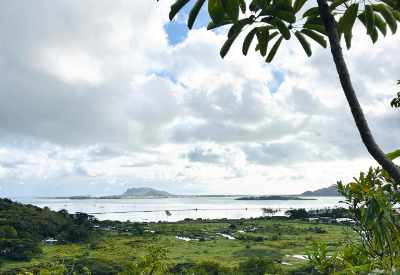
Holoholo Mauka
Gain new perspectives of He‘eia re-discovering our upland regions. Planting for our future generations!
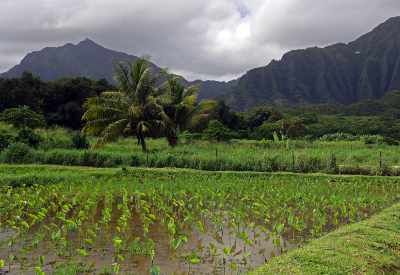
Lo‘i Kalo
Maintain kinship with our elder brother Hāloa and learn methods of cultivating Kalo.

Pepeiao Lā’au
Visit the “Fungi” at the mushroom facility and delve into the fascinating realm of growing mushrooms.
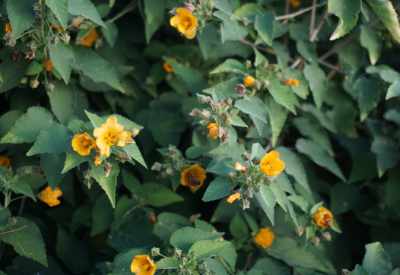
Lāʻau/Mea Kanu
Explore the vast variety of plants that grow in He‘eia.
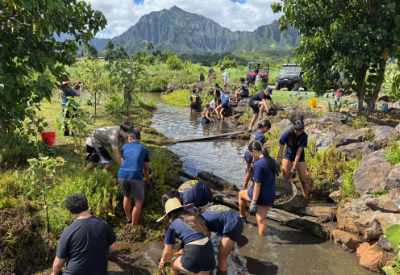
Ka wai a Kāne
Get your feet wet stewarding our ‘auwai to continue the flow of wai through He‘eia ‘ahupua‘a
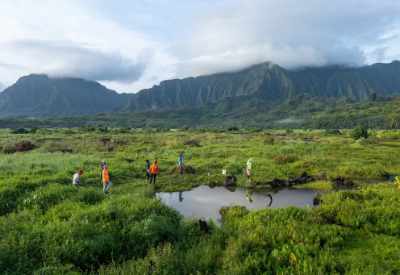
‘Āina Ho’opulapula
Progress the revitalization efforts of He‘eia wetland.
Loʻi/Ola Hāloa
Kumuhana/Description
Come see our 10+ acres of kalo production (both loʻi and māla kalo) and we can share more about the significance of kalo in Hawaiʻi. Learn about the moʻolelo of Hāloa, how to cultivate kalo in different environments and what role kalo plays in the ahupuaʻa system.
(Since there is so much to cover, we ask you choose two objectives to focus on plus our hana portion of the day [usually 30-45 min])
Learning Objectives: Ola Hāloa
- Moʻolelo of Hāloanakalaukapalili
- Where does kalo come from and why is it grown in Hawaiʻi
- Learn the different ways kalo can grow
- What are the parts of the kalo and how they are used
Agenda
| Time | Activity |
|---|---|
| 30-45 min | Protocol/Welcoming Hoʻolauna/Introductions & History of Heʻeia Break before activity |
| ~2 hrs | Lesson/Activity (i.e. malama ʻāina, kalo, wai, etc.) Closing piko |
| 30 min | Panina (End, closing, washing off) |
Activities Include
- Moʻolelo (All ages)
- Hana with the kalo (can be weeding, planting, harvesting, hehihehi, etc.) [this portion is dependant on what is available that day]
Takeaways
- Establish relationship with Hāloanaka and the on-going revitalization/management efforts in Heʻeia
- Loʻi etiquette, ʻoihana loʻi/loʻi techniques
- Learn the role of loʻi in an ahupuaʻa
- How do you mālama kalo
ʻŌlelo Hawaiʻi Translations
- Kalo
- taro root
- Mālama
- to take care
- Hāloanakalaukapalili
- ancestral name of kalo
- Hāloa
- ancestral name of first kanaka (Hawaiian)
- Loʻi kalo
- wetland taro field
- Māla kalo
- dryland taro field
- Hehihehi
- stomping motion to prep field
- Ahupuaʻa
- land division determined by water and goes from mountain to sea (mauka to makai)
Aia i hea ka wai a Kāne – Where is the waters of Kāne
Kumuhana/Description
This is an educational workday that provides hands-on experience of ahupuaʻa resource management through ʻāina stewardship. Students will participate and help progress the revitalization efforts of Heʻeia Ahupuaʻa; gaining insights on resource management techniques that promote and enhance ahupuaʻa functioning and wellbeing.
Wai is one of the most important aspects of an ahupuaʻa and is a great reflection of an ʻāina’s richness or waiwai, because of what the ahupuaʻa was able to produce and provide. Wai was constantly monitored, carefully managed and distributed fairly throughout the ahupuaʻa to ensure each steward an ample amount of wai to fulfill their kuleana to the overall ahupuaʻa. Wai’s many forms and characteristics create the uniqueness of an ahupuaʻa which allows us to learn how to utilize and support the overall ahupuaʻa in a pono manner.
Learning Objectives: Wai/Waiwai
- Understanding of wai as a cultural and ecological component crucial to ahupuaʻa functioning and wellbeing.
- Understanding different forms of water and where it can be found.
- Assist in ahupuaʻa revitalization and resource management.
Agenda
| Time | Activity |
|---|---|
| 30-45 min | Hoʻolauna/Introduction to place and space/Safety debriefing |
| ~2 hrs | ʻĀina Education/Interactive Learning |
| 30 min | Panina |
Activities May Include
- Mālama i ka wai – Clearing Auwai (7th grade +)
- Removing bank overgrowth/ʻōpala
- Species identification (native/invasive species management)
- Mahele/watershed/water cycle/tidal cycle (All ages): stream monitoring (tidal/rain influence and variance)
- Project based learning (5th grade +): ʻĀina based research (i.e., archival research, ecosystem surveys, water quality monitoring, watershed mapping)
Takeaways
- Comprehension of different forms of Wai and where it can be found within the ahupuaʻa.
- Establish a relationship with Heʻeia ahupuaʻa and the on-going revitalization and resource management efforts.
Lāʻau/Mea Kanu – Plants
Kumuhana/Description
This is an educational workday that provides hands-on experience of ahupuaʻa resource management through ʻāina stewardship. Students will participate and help progress the revitalization efforts of Heʻeia Ahupuaʻa; gaining insights on resource management techniques that promote and enhance ahupuaʻa functioning and wellbeing.
The management of our plant resources has a crucial balance that is monitored seasonally and managed accordingly to the functional roles it may serve socially and/or ecologically. Maintaining and building native revitalization areas is a catalyst to the continuity of the recruitment and retention of native micro and macro fauna (e.g., ʻŌpae, pua ʻamaʻama, ʻalae ʻula, pinao, kānaka, etc.).
Learning Objectives: Lāʻau/Mea Kanu
- Increased plant identification comprehension (i.e., seasonality, morphology, ecological niches, reproductivity, etc.) and ecological functions of plants within ahupuaʻa systems.
- Comprehension of plant propagation and landscaping techniques.
Agenda
| Time | Activity |
|---|---|
| 30-45 min | Hoʻolauna/Introduction to place and space/Safety debriefing |
| ~2 hrs | ʻĀina Education/Interactive Learning |
| 30 min | Panina |
Activities May Include
- Mālama ʻĀina (5th grade +): Brush removal, solarization, outplanting, ag-burns, plant identification, weeding, seed collection, propagation, etc.
- Hana Noʻeau (All ages): Stamps, plant press, kaula, food preparation
Takeaways
- Establish a relationship with Heʻeia ahupuaʻa and the on-going restoration/management efforts
- Conservation Techniques (i.e., Brush Removal, Solarization, Outplanting, Ag-burns, Plant Identification, Weeding, etc.)
Holoholo Mauka
Kumuhana/Description
This is an educational workday that provides hands-on experience of ahupuaʻa resource management through ʻāina stewardship. Join our mauka revitalization project, where we aim to establish food forests and rehabilitate native ecosystems.
Learning Objectives: Holoholo Mauka
- Gain new perspectives and understanding of Heʻeia ʻahupuaʻa and watershed.
- Plant identification and utilization.
Agenda
| Time | Activity |
|---|---|
| 15 min | Safety debriefing/Go to work area |
| 30 min | Hike up/ascend to work site |
| 15 min | Hoʻolauna/Introduction to place and space |
| ~2 hours | ʻĀina Education/Interactive Learning |
| ~1 hour | Descend/clean up |
Activities May Include
- Invasive species removal
- Clearing debris
- Albizia eradication (mahele o ke kumu lāʻau)
- Moʻolelo
- Outplanting
- Plant index survey
- Nursery
- Seed collection and propagation
- Trail building/Maintenance
- Sāhele ʻahupuaʻa (land divisions, resource, etc.)
Takeaways
- Gain mauka perspective of Heʻeia with an understanding of the division of the ʻahupuaʻa and inoa ʻāina.
- Plant food trees and establish native ecosystems for the future generations
ʻĀina Hoʻopulapula (Wetland)
Kumuhana/Description
This is an educational workday that provides hands-on experience of ahupuaʻa resource management through ʻāina stewardship. Slip on your boots and help continue the revitalization of Heʻeia wetland.
Learning Objectives: Wetland
- Gain new perspectives and understanding of Heʻeia ʻahupuaʻa and watershed.
- Learn about wetland plants and their function for ʻahupuaʻa health and wellbeing.
Agenda
| Time | Activity |
|---|---|
| 30-45 min | Hoʻolauna/Introduction to place and space/Safety debriefing |
| ~2 hrs | ʻĀina Education/Interactive Learning |
| 30 min | Panina |
Activities May Include
- Moʻolelo (all ages)
- Hana (all ages): clean waterways, invasive species removal (Grass/shrubbery), plastic solarization, outplanting, weeding, agricultural burns, invasive fish removal
Takeaways
- Contribute to the maintenance and revitalization of Heʻeia wetland.
- Understand the importance of the wetland to the adjacent coastal ecosystems and resource systems.
Kuʻi ʻĀi (Poi Pounding) Workshop
Description
Come kuʻi with us! If you want a different way to learn about kalo and get to taste the ʻono, kuʻi ʻāi (poi pounding) is a great way to be engaged with Hāloanakalaukapalili. You will learn some history on kuʻi ʻāi, how to prep the kalo and how to pound poi.
Objectives
- How to cook kalo and some ways it was cooked traditionally
- How to prep kalo for poi pounding and what all parts of the kalo were for
- How to prep papa a me pohaku kuʻi ʻāi for poi pounding and how they were traditionally made
- How to pound poi and learn the different stages (from kalo paʻa to poi!)
- Try freshly made poi!
ʻŌlelo Hawaiʻi Translations
- Kuʻi ʻāi
- poi pounding
- Kalo
- Taro root
- Hāloanakalaukapalili
- ancestral name for kalo
- Papa a me pohaku kuʻi ʻāi
- Board and stone poi pounder
- Kalo paʻa
- cooked, cleaned taro root
- Poi
- paste-like food made of taro root
Email [email protected] for information about cost for this activity.
Educational Visit Fees
A three-hour field trip experience includes a service-learning project and related educational lessons that can be subject-specific if requested.
Our prices are as follows:
- Kamaʻāina – Hawaiʻi Based Schools: $10/person including adults
- Malahini/Non-Residents: $15/person including adults
We do offer discounted rates based on eligibility. Please contact [email protected] for more information.